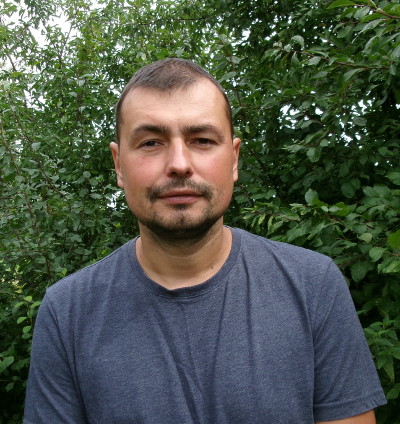
Alexey Noskov (PhD) - Research Fellow in AI, Climate & Society at Hughes Hall and CFI (ITH), University of Cambridge, UK
Spatial systems engineering is my research core that develops geospatial intelligence for resilient infrastructure through spatial change science. I combine geospatial data science, remote sensing, GeoAI, network analysis and spatial modelling to understand how infrastructure systems evolve, interact and respond to environmental, societal and technological change. My current work focuses on AI infrastructure, critical mineral supply chains, transport resilience, climate adaptation and infrastructure vulnerability, with the broader aim of supporting evidence-based decisions for resilient infrastructure planning.
- Contact information and Social Media Links
- Research Areas
- Affiliation
- Academic background
- Main publications
- Skills
- Awards and Activity
Contact information
Personal web-page: a.n-kov.com
Personal Email:
Address: Hughes Hall Cambridge CB1 2EW, UK (link) and Level 1, 16 Mill Lane Cambridge,CB2 1SB, UK (link)
Tel: +44 (0)1223 330484
Work Email:
ORCID: 0000-0003-0503-6558 (Link)
Professional/Scientific/Social networks: ResearchGate, LinkedIn, GitHub, GoogleScholar, Publons, and Scopus.
Main recent research areas
MacroGeoComputing: AI Data Centres, Critical Minerals Supply Chains, Mining EGS, Landuse Change, Population Displacement, Internally Displaced People (IDPs), and Land Surface Temperature. MicroGeoRobotics: Multi-Sensor Visually-Tracked Rover (UGV) for Forest Phenology and Forest Floor Biogeochemistry / Microbiology Monitoring, Low-Range Insect Radar, and Sensor Boxes. GIS Data: Generalization, Quality, and Integration.
AI, Climate & Society: AI Data Centres - Locations, Energy and Water Consumption / Pollution, Social and Environmental Impact, Future Scenarios, Climate Change Challenges, and Transition to Zero-Carbon Green Energy.
Population Displacement: Internally Displaced Persons (IDPs), Forcibly Displaced People, Refugees, and Nomadic Populations in Africa.
Forest Dynamics: Insect Monitoring, Insect Radar (FMCW), Light Traps, Rover (UGV) for Forest Monitoring. Forest Sensor Networks. Trees Monitoring for Phenology, Survey (GNSS and Total Station). Point Cloud and Multi-Sensor Data Processing.
3D Generalization and Geo-Visualization of Urban Environment (specifically Buildings). Spatial Data Quality and Quality of WebGIS Services Assurance. Spatial Data Fusion. Web and Desktop GIS Development. OpenStreetMap (Processing of Big Data Files and Intrinsic Quality).
Affiliation
Since 2024 to date, Research Fellow at Leading UK Institutions:
- Since April 2026, Research Fellow in AI, Climate & Society, Hughes Hall and Leverhulme Centre for the Future of Intelligence (CFI) of Institute for Technology and Humanity (ITH), University of Cambridge
- Refficiency and CCML, Department of Engineering, University of Cambridge
- Research Fellow at WorldPop, University of Southampton (resigned), Internally Displaced People (Nigeria and DRC) and Nomadic Population (Somalia).
Postdocs 2016-2024:
- PostDoc III: University of Twente, GeoHot (Land Surface Temperature - Satellite Imagery Resampling - Machine Learning).
- PostDoc II (2019-2023, Uni-Marburg): A: (2023) - Microcosm Earth Center, Philipps University of Marburg, Germany: The MicroMap project (PI). B: (2019-2022) - Laboratory for Climatology and Remote Sensing, Faculty of Geography, Philipps University of Marburg, Germany: The Natur4.0 project, leader of the group - Prof. Dr. Joerg Bendix.
- PostDoc I (2016 - 2018, Uni-Heidelberg) - GIScience research group of Heidelberg University, Germany : The WeGovNow Project (wegovnow.eu) - Data Quality and Quality of Service Assurance and Improvement.
Derivative software projects:
- GSDR's CMD - Critical Minerals Dashboard,
- GSDR.GQ - Geo-Spatial Data Repository for "Grand Quality",
- IGIS.TK - Integrated Geographic Information System - Tool Kit,
- Tiles.CF - Tiles Common Framework.
Academic background
- 10/2012-09/2016: PhD., "3D Generalization of Urban Environment" (Supervised by Prof. Dr. Yerach Doytsher) Israel Institute of Technology (The Technion) (Department of Mapping and Geoinformation Faculty of Civil and Environmental Engineering), Haifa, Israel.
- 06/2007 - 05/2011: Research fellow at Research Laboratory of Geoecology of the Northern Territories, Faculty of Geography, Lomonosov Moscow State University, Russia.
- 09/2002 - 05/2007: M.Sc., Lomonosov Moscow State University (Department of Cartography and Geoinformatics Faculty of Geography), Russia.
Publications:
Noskov, A., Qader, S., and Lazar, A. N. (2026). Spatially Integrated Displacement Datasets for Nigeria and the Democratic Republic of the Congo (2022–2025). WorldPop Open Population Repository (WOPR), University of Southampton. DOI: 10.5258/SOTON/WP00826. WOPR: WorldPop Open Population Repository (Spatially Integrated Displacement Datasets). GRID3 Nigeria: GRID3 Nigeria – Spatially Integrated Displacement Datasets v1.0. GRID3 Democratic Republic of the Congo: GRID3 DRC – Spatially Integrated Displacement Datasets v1.0.
Noskov, A., Cuevas Verdin, G., Cullen, J. M. and Cabrera Serrenho, A. (2026). Strengthening Critical Mineral Supply Chain Resilience through Multi-Scale Geospatial Monitoring. Knowledge Brief. University of Cambridge. Apollo – University of Cambridge Repository. CCML-A4_PB4_digital_v2.pdf, Internal Link, , Internal Link (compressed) 10.17863/CAM.128869
Journal Papers:
- Baptiste Andrieu; Benjamin Adams; Mehrnoosh Heydari; Philip Mitchell; Luke Cullen; Alexey Noskov; Julian M. Allwood; André Cabrera Serrenho; Jonathan Cullen (2026). Ten years on: Are raw material criticality assessments making more sense? Resources, Conservation and Recycling 10.1016/j.resconrec.2026.108875
- Mehrnoosh Heydari; Alexey Noskov; Karla Cervantes Barron; Mehmet Metehan Ciftci; Baptiste Andrieu; Roseta Mwape Chabala; Mwansa Matokwani; André Cabrera Serrenho; Jonathan M Cullen (2026) Toward responsible mining: Linking ESG strategies with spatial analysis in Zambia’s copper mining industry. The Extractive Industries and Society (2026-09). 10.1016/j.exis.2026.101908
- Ermolov A.A., Kazhukalo G.A., Noskov A.I., Ogorodov S.A. Seafloor morphology of the Ob River Gulf, Kara Sea. Lomonosov Geography Journal. 2024;(1):89-102. (In Rus.) 10.55959/MSU0579-9414.5.79.1.7
- Dirk Zeuss, Lisa Bald, Jannis Gottwald, Marcel Becker, Hicham Bellafkir, Jörg Bendix, Phillip Bengel, Larissa T. Beumer, Roland Brandl, Martin Brändle, Stephan Dahlke, Nina Farwig, Bernd Freisleben, Nicolas Friess, Lea Heidrich, Sven Heuer, Jonas Höchst, Hajo Holzmann, Patrick Lampe, Martin Leberecht, Kim Lindner, Juan F. Masello, Jonas Mielke Möglich, Markus Mühling, Thomas Müller, Alexey Noskov, Lars Opgenoorth, Carina Peter, Petra Quillfeldt, Sascha Rösner, Raphaël Royauté, Christian Mestre-Runge, Dana Schabo, Daniel Schneider, Bernhard Seeger, Elliot Shayle, Ralf Steinmetz, Pavel Tafo, Markus Vogelbacher, Stephan Wöllauer, Sohaib Younis, Julian Zobel, Thomas Nauss (2023). Nature 4.0: A networked sensor system for integrated biodiversity monitoring. Global Change Biology, 30, e17056. 10.1111/gcb.17056
- Noskov, Achilles, Bendix (2023): Toward forest dynamics’ systematic knowledge: concept study of a multi-sensor visually tracked rover including a new insect radar for high-accuracy robotic monitoring. Frontiers in Ecology and Evolution, DOI: 10.3389/fevo.2023.1214419.
- Noskov A, Achilles S, Bendix J. Presence and Biomass Information Extraction from Highly Uncertain Data of an Experimental Low-Range Insect Radar Setup. Diversity. 2021; 13(9):452 DOI: 10.3390/d13090452, Internal Link.
- Noskov A, Bendix J, Friess N., "A Review of Insect Monitoring Approaches with Special Reference to Radar Techniques", Sensors, 2021, 21(4):1474, 10.3390/s21041474, Internal Link
- Hu, X., Noskov, A., Fan, H., Novack, T., Li, H., Gu, F., Shang, J. and Zipf, A. (2021) "Tagging the main entrances of public buildings based on OpenStreetMap and binary imbalanced learning", International Journal of Geographical Information Science, Taylor & Francis, DOI: 10.1080/13658816.2020.1861282
- Hu, X., Fan, H., Noskov, A., Wang, Z., Gu, F., Shang, J., "Room semantics inference using random forest and relational graph convolutional networks: A case study of research building", Transactions in GIS, 2020; 00: 1– 41, DOI: 10.1111/tgis.12664
- Xuke Hu, Lei Ding, Jianga Shang, Hongchao Fan, Tessio Novack, Alexey Noskov and Alexander Zipf, "Data-driven approach to learning salience models of indoor landmarks by using genetic programming", International Journal of Digital Earth, 2020 DOI: 10.1080/17538947.2019.1701109
- Hu, X., Fan, H., Noskov, A., Zipf, A., Wang, Z., Shang, J., "Feasibility of Using Grammars to Infer Room Semantics:, Remote Sensing, MDPI, 2019, 11, 1535 DOI:10.3390/rs11131535
- Noskov A. and Zipf A., "Open-data-driven embeddable quality management services for map-based web applications", Big Earth Data, Taylor & Francis, 2:4, 395-422, 2019 DOI:10.1080/20964471.2019.1592077
- Xuke Hu, Hongchao Fan & Alexey Noskov, "Roof model recommendation for complex buildings based on combination rules and symmetry features in footprints" International Journal of Digital Earth, Taylor & Francis, pp. 1-25, 2017 DOI:10.1080/17538947.2017.1373867
- Noskov A., Doytsher Y., "A Linear Approach to Improving the Accuracy of City Planning and OpenStreetMap Road Datasets" International Journal on Advances in Systems and Measurements, vol. 10, Number 1&2, ISSN: 1942-261x, pp. 23-34, 2017. Internal-Link External-Link DOI:10.5281/zenodo.1314636
- Noskov A., Doytsher Y., "Triangulation and Segmentation-based Approach for Improving the Accuracy of Polygon Data" International Journal on Advances in Software, vol. 9, no 1&2, ISSN: 1942-2628, pp. 24-36, 2016. Internal-Link External-Link DOI:10.5281/zenodo.1314451
- Noskov A., Doytsher Y., "Hierarchical Quarters Model Approach toward 3D Raster Based Generalization of Urban Environments", International Journal on Advances in Software, vol. 7, no. 3&4,ISSN: 1942-2628, pp. 343-353, 2014. Internal-Link External-Link DOI:10.5281/zenodo.1314441
- S.A. Ogorodov, N.G. Belova, D.E. Kuznetsov, A.I. Noskov, "Multi-temporal aerospace imagery for coastal dynamics investigations at Kara Sea", Earth from Space – the Most Effective Solutions, 2011, 10, pp. 66-70, ISSN 2218-2950 Internal-Link .
- Kamalov, A. M., S. A. Ogorodov, V. Yu Birukov, G. D. Sovershaeva, A. S. Tsvetsinsky, V. V. Arkhipov, N. G. Belova, A. I. Noskov, and V. I. Solomatin. "Coastal and seabed morpholithodynamics of the Baydaratskaya Bay at the route of gas pipeline crossing." Kriosfera Zemli (Earth's Cryosphere) 10, no. 3 (2006): 3-14 (in Russian). Internal-Link External-Link
Book Chapters:
- Noskov, A. (2022). Radar as a Key to Global Aeroecology: Essentials of Technology and Development Milestones. In R. Castanho (Eds.), Handbook of Research on Sustainable Development Goals, Climate Change, and Digitalization (pp. 482-505). IGI Global. Full-text Internal-Link, DOI: 10.4018/978-1-7998-8482-8.ch028
- Noskov, A., Grinberger, A. Y., Papapesios, N., Rousell, A., Troilo, R., & Zipf, A. (2019), "Modelling and Assessing Spatial Big Data: Use Cases of the OpenStreetMap Full-History Dump." In A. Voghera, & L. La Riccia (Eds.), Spatial Planning in the Big Data Revolution (pp. 16-44). Hershey, PA: IGI Global. Full-text Internal-Link, Full-Text (Publisher, Subscription Required), DOI:10.4018/978-1-5225-7927-4.ch002
- Noskov A., Doytsher Y., "Preparing Simplified 3D Scenes of Multiple LODs of Buildings in Urban Areas Based on a Raster Approach and Information Theory", Thematic Cartography for the Society, pp. 221-236, Springer International Publishing, ISBN: 978-3-319-08179-3, 2014. Internal-Link DOI: 10.1007/978-3-319-08180-9_17
Fully Refereed Conference Papers:
- Noskov, A. and Zipf, A.: Definition of Contour Lines Interpolation Optimal Methods for e-Government Solutions, ISPRS Ann. Photogramm. Remote Sens. Spatial Inf. Sci., IV-4, 163-170, DOI: 10.5194/isprs-annals-IV-4-163-2018, 2018.
- Noskov, A.: Smart City WebGIS Applications: Proof of Work Concept for High-Level Quality-of-Service Assurance, ISPRS Ann. Photogramm. Remote Sens. Spatial Inf. Sci., IV-4/W7, 99-106, DOI: 10.5194/isprs-annals-IV-4-W7-99-2018, 2018.
- Noskov A. and Zipf A., "Backend and Frontend Strategies for Deployment of WebGIS Services", Proc. SPIE 10773, Sixth International Conference on Remote Sensing and Geoinformation of the Environment (RSCy2018), 107730I (6 August 2018); Internal-Link DOI: 10.1117/12.2322831
- Noskov A., "Open Source Tools for Coastal Dynamics Monitoring", Proc. SPIE 10773, Sixth International Conference on Remote Sensing and Geoinformation of the Environment (RSCy2018), Vol 107731C (6 August 2018) Internal-Link DOI: 10.1117/12.2326277
- Noskov A.,"Computer Vision Approaches for Big Geo-Spatial Data: Quality Assessment of Raster Tiled Web Maps for Smart City Solutions" Proceedings 7th International Conference on Cartography and GIS, Vol. 1, Editors: T. Bandrova & M. Konecny, Publisher: Bulgarian Cartographic Association, ISSN: 1314-0604, pp. 296-305, June 18-23 2018 Internal-Link DOI: 10.5281/zenodo.1346671
- Noskov A., Zipf A. and Rousell A. "Data Quality Concept for e-Government Web-Map Based Services" Proceedings 7th International Conference on Cartography and GIS, Vol. 1, Editors: T. Bandrova & M. Konecny, Publisher: Bulgarian Cartographic Association, ISSN: 1314-0604, pp. 306-315, June 18-23 2018 Internal-Link DOI: 10.5281/zenodo.1314215
- Guido Boella, Louise Francis, Elena Grassi, Axel Kistner, Andreas Nitsche, Alexey Noskov, Luigi Sanasi, Adriano Savoca, Claudio Schifanella, and Ioannis Tsampoulatidis. 2018. WeGovNow: A Map Based Platform to Engage the Local Civic Society. In Companion Proceedings of the The Web Conference 2018 (WWW '18). International World Wide Web Conferences Steering Committee, Republic and Canton of Geneva, Switzerland, 1215-1219 DOI: 10.1145/3184558.3191560
- Noskov A., Doytsher Y., "A Linear Approach for Spatial Data Integration" GEOProcessing 2016: The 8th Intentional Conference in Advanced Ceographic Information Systems, Applications, and Services, ISBN: 978-1-61208-469-5 , pp. 93-99, Italy, 2016. Internal-Link External-Link DOI: 10.5281/zenodo.1314427
- Noskov A., Doytsher Y., "A Segmentation-based Approach for Improving the Accuracy of Polygon Data", GEOProcessing 2015: The 7th Intentional Conference in Advanced Ceographic Information Systems, Applications, and Services, ISBN: 978-1-61208-383-4, pp. 69-74, Portugal, 2015. Internal-Link External-Link DOI: 10.5281/zenodo.1314408
- Noskov A., Doytsher Y., "Urban Perspectives: A Raster-Based Approach to 3D Generalization of Groups of Buildings",GEOProcessing 2013: The 5th Intentional Conference in Advanced Ceographic Information Systems, Applications, and Services, ISBN: 978-1-61208-251-6, pp. 67-72, France, 2013. Internal-Link External-Link DOI: 10.5281/zenodo.1314118
Other Publications
- Baptiste Andrieu, Karla Cervantes Barrón, Ella Jennings, Alexey Noskov, Samuel Stephenson, André Cabrera Serrenho. Editors: Gretel Cuevas Verdin, Lihani Du Plessis, Jonathan Cullen (2025). Critical Minerals in the ASEAN region: assessing opportunities and risks. Climate Compatible Growth, Publications, Refficiency, Internal Link
- Xuke Hu, Hongchao Fan, Alexey Noskov, Alexander Zipf, and Jianga Shang, "Main Entrance Tagging based on Intrinsic and Extrinsic Feature Extracted from OSM", 14th International Conference on Spatial Information Theory - Poster, DOI: 10.13140/RG.2.2.25967.18080
- Guido Boella, Elena Grassi, Adriano Savoca, Luigi Sanasi, Claudio Schifanella, Louise Francis,Axel Kistner, Andreas Nitsche, Alexey Noskov, Ioannis Tsampoulatidis, "WeGovNow: an integrated platform for social engagement in shaping future cities". I-cities 2018 4th Italian Conference on ICT for Smart Cities And Communities. L'Aquila, Italy, 19-21 September 2018
- Ogorodov, S. A., N. G. Belova, A. M. Kamalov, A. I. Noskov, N. N. Volobueva, M. N. Grigoriev, Sebastian Wetterich, and Pier Paul Overduin. "Storm surges as a forcing factor of coastal erosion in the western and eastern Russian Arctic." In Storm Surges Congress, pp. 13-17. 2010. External-Link
- Noskov, A. I., S. A. Ogorodov, and A. M. Kamalov. "Applying GIS Technologies for Investigating Of Baydaratskaya Bay Coastal Dynamics." The 6th Annual Arctic Coastal Dynamics (ACD) Workshop, Oct. 22-26, 2006: 70-71, Groningen, Netherlands Internal-Link External-Link
- Belova, N. G., V. I. Solomatin, A. I. Noskov, and S. A. Ogorodov. "Ural coast of Baydaratskaya Bay, Kara Sea: massive ice beds as a factor of coastal dynamics." The 6 th Annual Arctic Coastal Dynamics (ACD) Workshop, Oct. 22-26, 2006, Groningen, Netherlands (2008): 44-46.Internal-Link External-Link
Key words, skills, experience (2005 - 2026)
(main) Remote Sensing, Pattern Recognition, Computer Vision, Machine Learning, Spatial Statistics, Object Detection, UAV, UGV.
GIS, 3D Geo-Spatial Generalization and Visualization, Big Spatial Data Quality, Data Fusion, Quality-of-Service, WebGIS, Big Spatial Data, OpenStreetMap (VGI), Open Data, Arctic Coastal and Bottom Dynamics
(technology) Computer Vision, Spatial Statistics, Computational Geometry, Information Theory, Machine Learning, Map Algebra
(programming) Tcl/Tk, Unix/Bash, Python(numpy), C, C#, VTK, ImageMagic, NodeJS, OpenCV
(software) Free Open Source Software, Emacs, Apache Web Server, Debian GNU/Linux (+Ubuntu, OpenSuse, Gentoo, CentOS), Office (LaTeX, Microsoft, Libre), Vector (Inkscape, Adobe Illustrator) and Raster (GIMP, Adobe Photoshop) Graphics, CAD (LibreCAD and Autocad)
(web) REST API, HTML5/CSS3, JavaScript, JQuery, Apache Rivet, (Geo)Django
(databases) SQLite, PostgreSQL, MariaDB (MySQL)
(GIS) Spatialite, PostGIS, GDAL/OGR, Proj4, QGIS, GRASS GIS (Python and C API), ArcGIS (ArcMap, ArcScene, etc.), AcrGIS Engine (C#), OpenLayers, CesiumJS
Past Awards and Activity
- Microcosm Earth Center (Uni-Marburg) fellowship holder (2023-2024)
- Best paper "Computer Vision Approaches for Big Geo-Spatial Data: Quality Assessment of Raster Tiled Web Maps for Smart City Solutions" from Special Session Digital Earth for Smart Solutions (recommended for International Journal of Digital Earth), 7th International Conference on Cartography & GIS, 18-23 June, Sozopol, Bulgaria (Link)
- Best Paper "Rectilinear Approach to 3D Generalization of Building Models" by Alexey NOSKOV and Yerach DOYTSHER. Invitation for re-submission the paper to Survey Review Journal. Commission 3 meeting and Geomat 2016, 3-7 November 2016, Iasi, Romania, FIG Commission 3 Annual Meeting (http://fig.netwww.fig.net/printpage.asp?page=http://fig.netwww.fig.net/news/news_2016/2016_11_com3.asp)
- Best Paper Award and Invitation to Submit an Extended Version to International Journal on Advances in Systems and Measurements,"A Linear Approach for Spatial Data Integration" By Alexey Noskov, Yerach Doytsher Presented during GEOProcessing 2016, The Eighth International Conference on Advanced Geographic Information Systems, Applications, and Services, held in Venice, Italy - April 24-28, 2016 (https://www.iaria.org/conferences2016/awardsGEOProcessing16/geoprocessing2016_a3.pdf)
- Best Paper Award and Invitation to Submit an Extended Version to International Journal on Advances in Software,"A Segmentation-based Approach for Improving the Accuracy of Polygon Data" By Alexey Noskov, Yerach Doytsher Presented during GEOProcessing 2015, The Seventh International Conference on Advanced Geographic Information Systems, Applications, and Services, held in Lisbon, Portugal - April 22-27, 2015 (http://www.iaria.org/conferences2015/awardsGEOProcessing15/geoprocessing2015_a3.pdf)
- Best Paper Award and Invitation to Submit an Extended Version to International Journal on Advances in Software,"Urban Perspectives: A Raster-Based Approach to 3D Generalization of Groups of Buildings" By Alexey Noskov, Yerach Doytsher Presented during GEOProcessing 2013, The Fifth International Conference on Advanced Geographic Information Systems, Applications, and Services, held in Nice, France - 24 February - 1 March, 2013 (http://www.iaria.org/conferences2013/awardsGEOProcessing13/geoprocessing2013_a8.pdf)
Past Activity
- Topic Editor at the MDPI's Remote Sensing.
- Topic Editor at the Taylor&Francis Big Earth Data Journal.
- Reviewer board member at the MDPI Entropy Journal
- Conducting the review for the following journals: IEEE Access, MDPI's IJGI, MDPI's IJERPH,, MDPI's Information, Taylor&Francis's Big Earth Data Journal, JETS, and BJMC
- Member of Scientific / Technical Program / Review Committee (random order):
- Free and Open Source for Geospatial Conference
- International Multidisciplinary Scientific GeoConference
- CSAE2019: The 3rd International Conference on Computer Science and Application Engineering - reviewer team member.
- International Conference on Building and Exploring Web Base Environments (https://www.iaria.org/conferences2020/ComWEB20.html,https://www.iaria.org/conferences2019/ComWEB19.html)
- International Conference on Advanced Geographic Information Systems, Applications, and Services, GEOProcessing (https://www.iaria.org/conferences2020/ComGEOProcessing20.html ,https://www.iaria.org/conferences2016/ComGEOProcessing16.html)
- The Ninth International Conference on Social Media Technologies, Communication, and Informatics SOTICS 2019 - November 24, 2019 to November 28, 2019 - Valencia, Spain https://www.iaria.org/conferences2019/ComSOTICS19.html
- Chair, plenary session "Geospatial Data Acquisition by Remote Sensing Technologies for Cartographic Purposes", 7th International Conference on Cartography & GIS, 18-23 June, 2018, Sozopol, Bulgaria
- OGC (Open Geospatial Consortium) Member